A single-player real-time strategy game: pick one of six real-world forces, build a base of generators, supply depots, barracks, factories and an airfield, then fight an AI opponent across armor, infantry and air power to take out its command center. Every unit and building model was generated from scratch with GPT-6 Astra and Blender MCP.
DUST FRONT is a base-building real-time strategy game: pick a force, drop generators and a supply depot to get your economy running, put up a barracks and a vehicle factory, and push tanks, infantry and aircraft out across the map at an AI opponent until one command center falls. It plays in the direct lineage of Command & Conquer and its imitators — a build sidebar on the command center, a minimap with a viewport box, drag-select boxes, right-click move/attack — and one commenter on the original post said as much: "that green sidebar is giving me Command & Conquer vibes." Six real-world forces are playable (Ukraine, USA, Iran, Russia, Turkey, Israel), each fielding its own roster of named, real hardware — an M1A2 Abrams for the USA, a T-90M for Russia, a Turkish Altay — rather than generic reskins.
Mustafa Akın (@mustafaakin) posted it as a browser-based, single-player RTS built with "ChatGPT Astra + Blender MCP," in his words taking "only 40 prompts including all asset generation from scratch," while adding upfront that it "obviously requires many improvements." A self-reply breaks the 40 prompts down: 2 for the initial concept, 11 adding features/factions/units/maps, 19 refining visuals/UI/sound/gameplay, and 8 on reviews and fixes — some delegated by Astra to smaller Luna/Sol sub-agents, for roughly 290 million tokens (97% cached input) on a "Pro 20x" subscription, which the author estimates at about $400 of equivalent API cost. Blender MCP is the detail worth sitting with: every tank, aircraft, infantry squad and building here is a distinct low-poly 3D model the pipeline generated and rigged, not a stock asset pack, and the in-game Armory names a real-world reference for several of them (the Abrams entry links straight to General Dynamics Land Systems' own product page).
It plays the game's own "beta" label straight — the credits page identifies this build as version 0.2.0. There's no campaign, no multiplayer, one AI opponent whose aggression scales with a difficulty slider, and only one battlefield size ("compact," per every map's own blurb). What's here, though, works: buildings queue with a real power/cash economy, supply trucks produce income over time, engineers capture flagged sites for a bonus, and a three-slide tutorial plus two camera-fly demos (Air Demo, Ground Demo) exist purely to onboard a first-time player — polish you wouldn't expect from something the author calls rough.
How to play DUST FRONT
- The setup screen is the whole front end: pick Your Force and an Opposition force from six real-world nations, one of four maps (Arid Lowlands, Industrial Crossroads, Wadi Crossing, Dnipro District — each a different terrain theme on the same compact battlefield template), an Operation, and a Difficulty, then press Deploy.
- Operation sets the win condition: Open Warfare is the standard skirmish (destroy the enemy HQ before yours falls), Field Training is a guided "learn the basics" run, Supply War drops both sides 20,000 credits and an oil station for a 15-minute economy race, and Hold the Line is a 12-minute timed defense of your own HQ. Difficulty (Easy/Normal/Hard) doesn't change your resources — it changes the AI: Easy gives you a 4-minute setup window with smaller attacks, Normal is "balanced attacks and expansion," Hard is "fast raids, aggressive counters."
- In a match, click your command center to open its build menu — Generator, Supply depot, Barracks, Factory, Airfield, Operations center, Defense, Rockets, a Missile Silo that starts locked, and a standalone Engineer unit. Placing one drops a cyan boundary marking how far from your base you're allowed to build, and that boundary only grows by capturing neutral field HQs.
- Barracks train infantry squads and Factories build vehicles — select the building, then click a unit card to queue it. An Airfield unlocks aircraft the same way, and only one structure builds at a time.
- Left-click a unit, or drag a box around several, to select. Right-click open ground to move, or an enemy to attack; hold A and click to issue an attack-move instead. Arrow keys pan the camera, the wheel zooms, and H snaps the view back to your base — standard C&C-style hotkeys.
- For economy: select your Supply depot to buy a supply truck, then select it and right-click a supply yard to assign it — it earns cash passively from there. Engineers can walk onto a flagged site and capture it for extra income. Watch the cash and power readouts under the minimap; a building placed without spare power just sits there underpowered.
Controls: Left-click a unit, or drag a box around several. Right-click the ground to move, or an enemy to attack; hold A then click to attack-move. Arrow keys pan the camera, the scroll wheel zooms, and H snaps the camera back to your base. Click your command center to open its build menu, then click a building card to place it, or click a barracks/factory/airfield to queue a unit.
Click Fullscreen above the game for the largest play area. If the game does not load, use Open in new tab to play it directly from our copy.
Why it's worth your time
The Armory (reachable from the title screen without deploying a match) is a full 3D catalogue, not a stats sheet: pick any of the six forces and browse Ground vehicles, Infantry, Aircraft or the shared Buildings list, and every entry is its own inspectable model — drag to orbit, scroll to zoom, a short doctrine-style blurb ("Angular welded turret, Relikt armor modules and a prominent rear bustle cage" for the T-90M), and for named vehicles a "Reference ↗" link out to the real manufacturer or program page. Infantry and the eight Buildings are shared "field infrastructure" across all six forces; ground vehicles and aircraft are not — each force's roster is genuinely distinct real-world hardware (Turkey's Altay and KORKUT versus the USA's Abrams and Phalanx C-RAM), a meaningfully larger asset-generation job than one faction reskinned five times. Every model here — every faction's vehicles and aircraft, every one of the eight shared buildings — was captured for this mirror by cycling all six forces through all four Armory categories, since a shallow capture of the default USA-vs-Russia matchup would have missed everything else.
The economy layer has more moving parts than a typical browser RTS bothers with: a build-radius that only expands by capturing neutral field HQs, supply trucks manually routed to a yard, and engineer-capturable flagged sites as a second income source. None of that is explained anywhere but the in-game tutorial and armory blurbs.
The credits page (linked from the title screen) is unusually forthcoming about the production pipeline for something built in 40 prompts: gunfire sounds are adapted from The Free Firearm Sound Library (BMacZero, CC0), environment textures come from Poly Haven (CC0), four original instrumental tracks were generated with ACE-Step 1.5 running 4-bit MLX weights locally, radio dialogue uses synthetic preset voices from Kokoro-82M, and the HUD's chrome-and-green icon atlas was generated with OpenAI's image tool, on top of Three.js and Meshoptimizer for rendering. It's a more detailed accounting of what's AI-generated versus licensed versus hand-set-up than most sites in this collection offer.
The rough edges the author flagged are easy to find: a single AI opponent rather than distinct personalities per difficulty, no in-match settings beyond the pause menu, and four maps that are really one template with different surface dressing. None of that stops a match from being playable start to finish. There is a real save system, though: battles persist to this browser automatically, and Save & load can export one as a file to move to another device.
How it was made and where it lives
Hosted on the author's own page. The author publishes as mustafaakin. Original: https://dust-front.mustafaakin.dev/. The Play button above runs our own unmodified copy, so the game keeps working here if that page goes down — which on free hosting usually has nothing to do with the author. Nothing about the game itself is changed, and the original stays linked from every page.
The post that led us here
Mustafa Akın@mustafaakinUsing ChatGPT Astra + Blender MCP I have built a browser based, single-player RTS Game. Obviously it requires many improvements, but it just took me only 40 prompts including all asset generation from scratch.
If you like DUST FRONT, try these
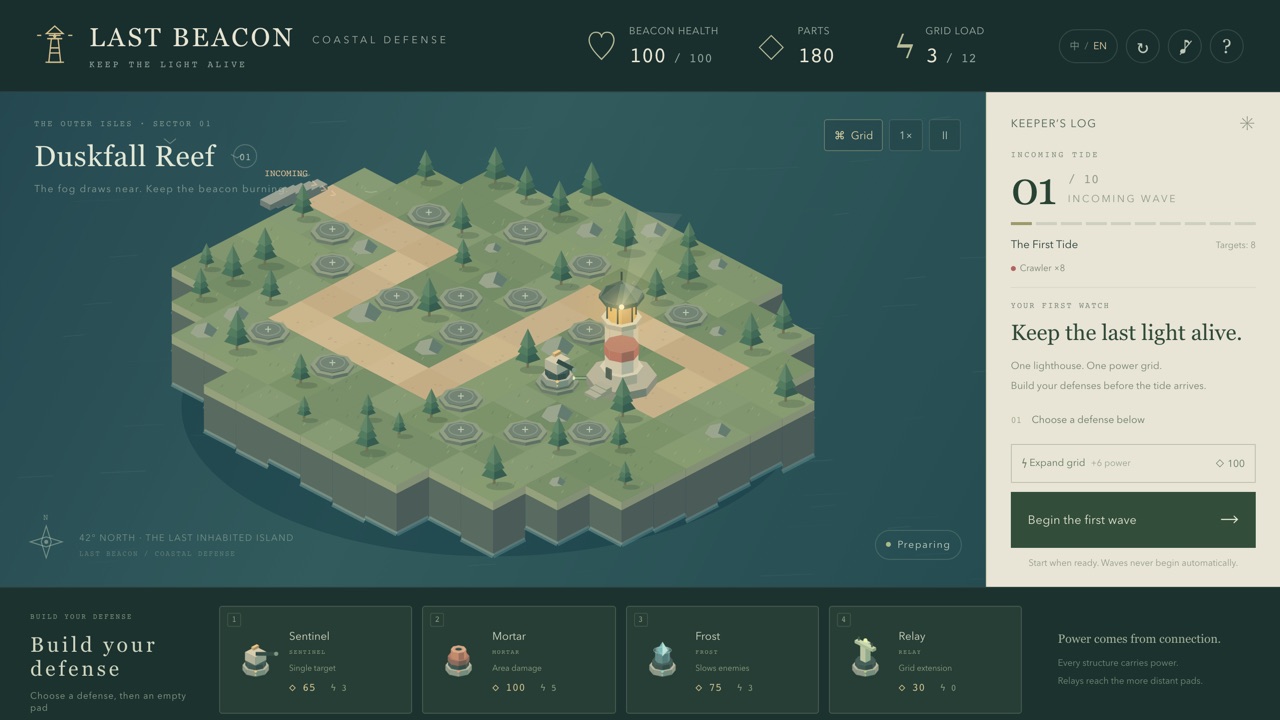
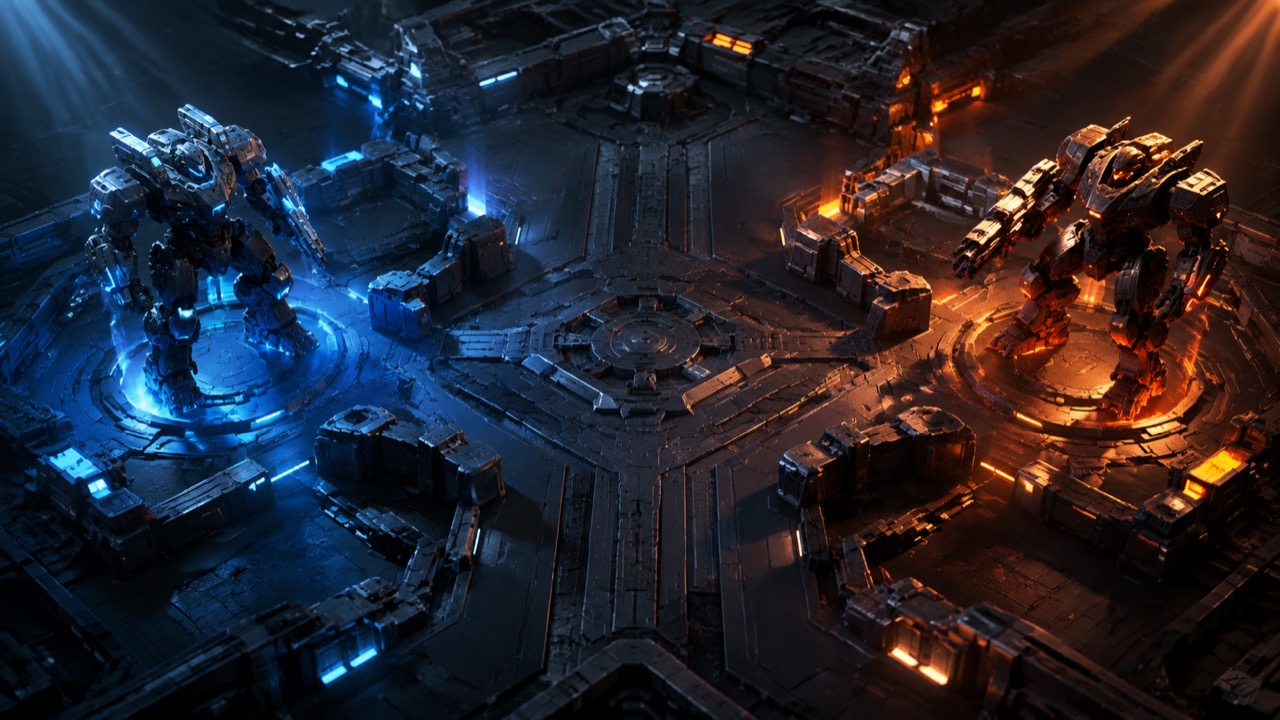
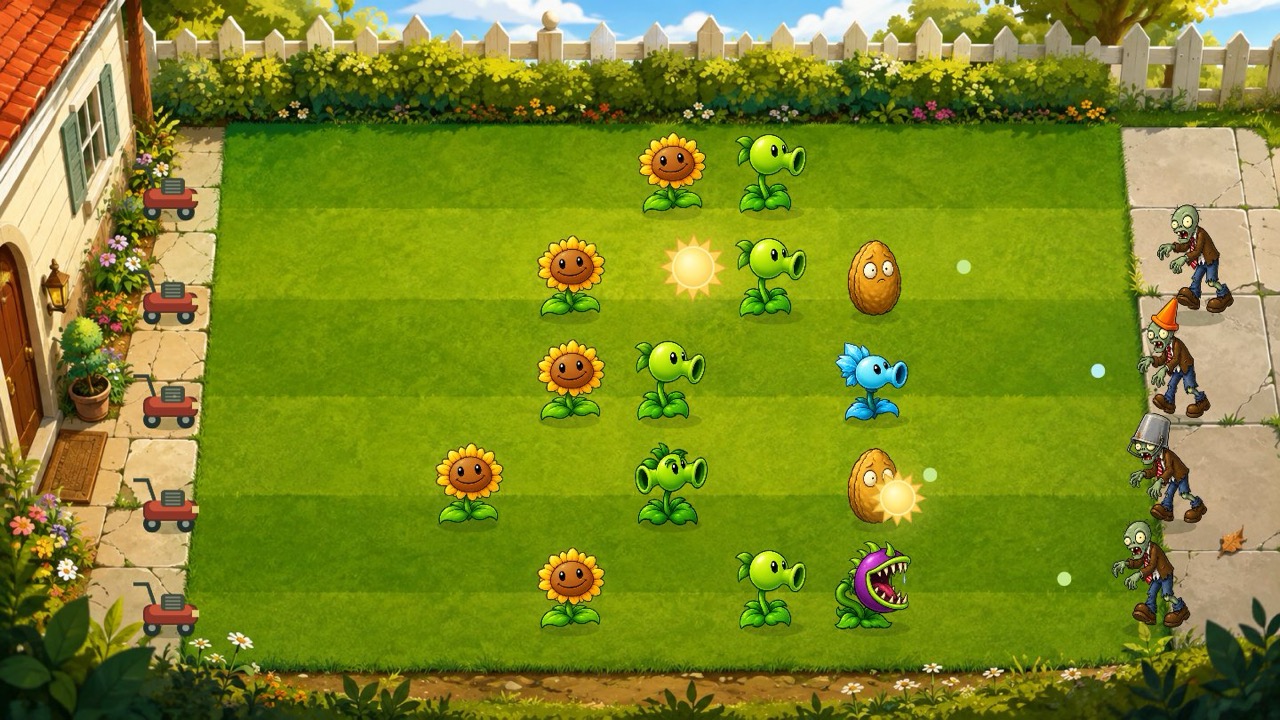
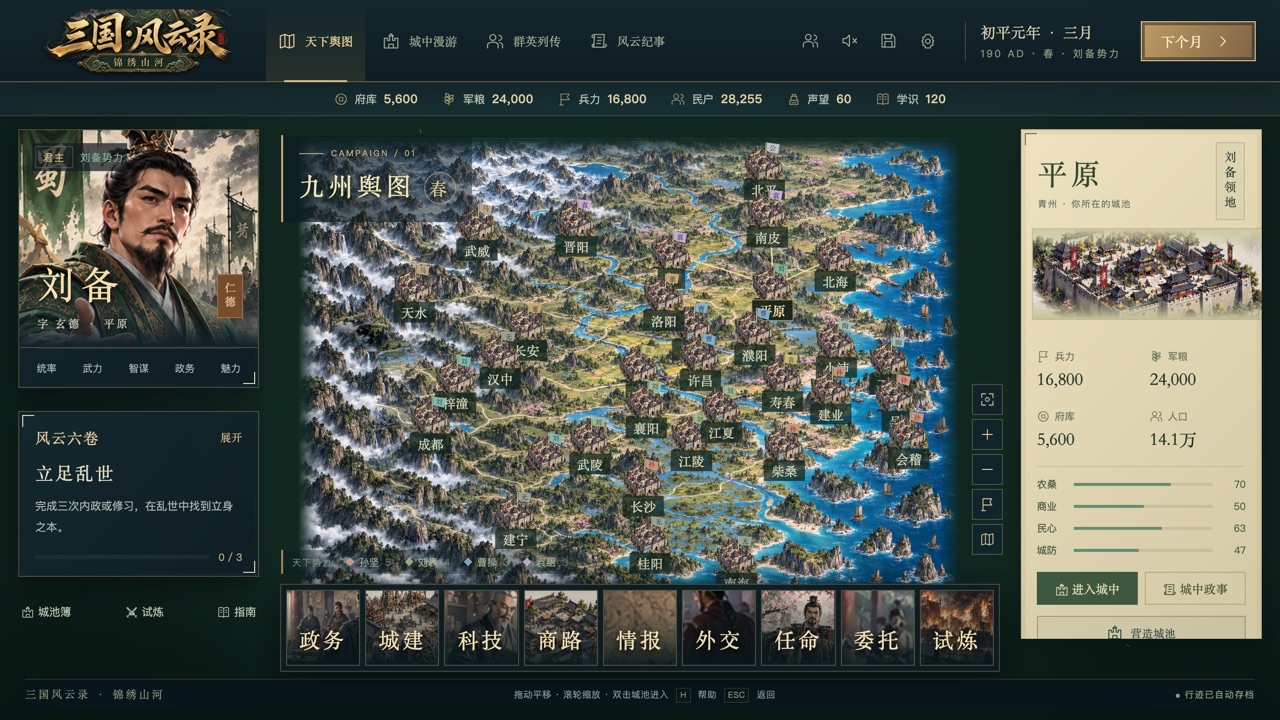
This is the collection's first real-time, base-building strategy game — everything else nearby is a different shape of "strategy." Three Kingdoms Chronicles is turn-based, following one warlord rather than commanding a faction live. Last Beacon and Plants vs Zombies · Garden Defenders are both tower defense — you place static defenses and hold a line, rather than building an economy and pushing units across a map.
Frequently asked questions
- Is it really single-player, or is there online multiplayer?
- Single-player only, against one AI opponent — there's no matchmaking or lobby anywhere in the interface. Difficulty changes how aggressively that AI expands and attacks, not who you're playing against.
- What factions can I play?
- Six: Ukraine, USA, Iran, Russia, Turkey and Israel. Buildings and infantry are shared, but ground vehicles and aircraft are a distinct, real-hardware-modeled roster per force — check the Armory to browse any force's lineup before deploying.
- What are the four Operation types?
- Open Warfare is the standard skirmish — destroy the enemy HQ before yours falls. Field Training is a guided basics run. Supply War is a 15-minute economy race that starts both sides with 20,000 credits and an oil station. Hold the Line is a 12-minute timed defense of your own HQ.
- Does it work on a phone or tablet?
- No. The game's own no-script fallback says it plainly: "This game needs JavaScript and a desktop browser with 3D graphics enabled." There's no touch control layer at all — selection boxes, building placement and attack-move all assume a mouse and keyboard.
- How was this actually built?
- GPT-6 Astra plus Blender MCP for the 3D assets, in about 40 prompts total per the author's own breakdown — including every unit and building model, generated from scratch rather than pulled from a stock pack.
- Is DUST FRONT free to play?
- Yes. Everything on Floating Arcade is free, with no account, ads or downloads.
- Can I embed this game on my own website?
- Yes — copy the snippet below. The embedded player links back here, which is how we ask to be credited.
Embed DUST FRONT on your site
Paste this where you want the game to appear: