A fictional design studio's portfolio rebuilt as a walkable 3D machiya lobby: sliding shoji doors, a wall of stacked CRTs playing eight case studies, and two genuinely working arcade Easter eggs hidden in the scene — a scored basketball hoop and a lobby cabinet shooter. One open-source index.html file, built with Fable 5.1.
Sublevel Studio is the portfolio site of a design studio that does not exist, rebuilt as a small 3D place you walk into rather than a page you scroll. It opens inside a wooden loft: a wall of open shelving, a staircase, sliding shoji doors, a basketball hoop bolted to a beam, a stack of old CRT televisions playing static, and a person sitting on a step with a dog beside them. Scroll past the loft and the 3D gives way to an ordinary — if very polished — studio site: eight case studies on stacked-CRT thumbnails, a services list, and a contact address.
It's the second thing in this collection from Meng To (@MengTo) in the same week, and the same underlying model, as StoryComet. The two could not be more differently positioned, though: StoryComet is a real paid product with accounts and billing behind it, which is why it's a link-out entry on this site. Sublevel Studio is the opposite case entirely — free, single-file, hosted on GitHub Pages, and open-sourced by the author the same day it shipped. The tweet that leads here says as much: "I open-sourced the three.js site I built with Fable 5.1," describing it as a further pass on a Kyoto aesthetic the author had already been exploring — the GitHub repo's own README lists a sibling project, Kage, as "an interactive five-chapter night walk through a Kyoto mountain temple," which is presumably the earlier work being pushed further here.
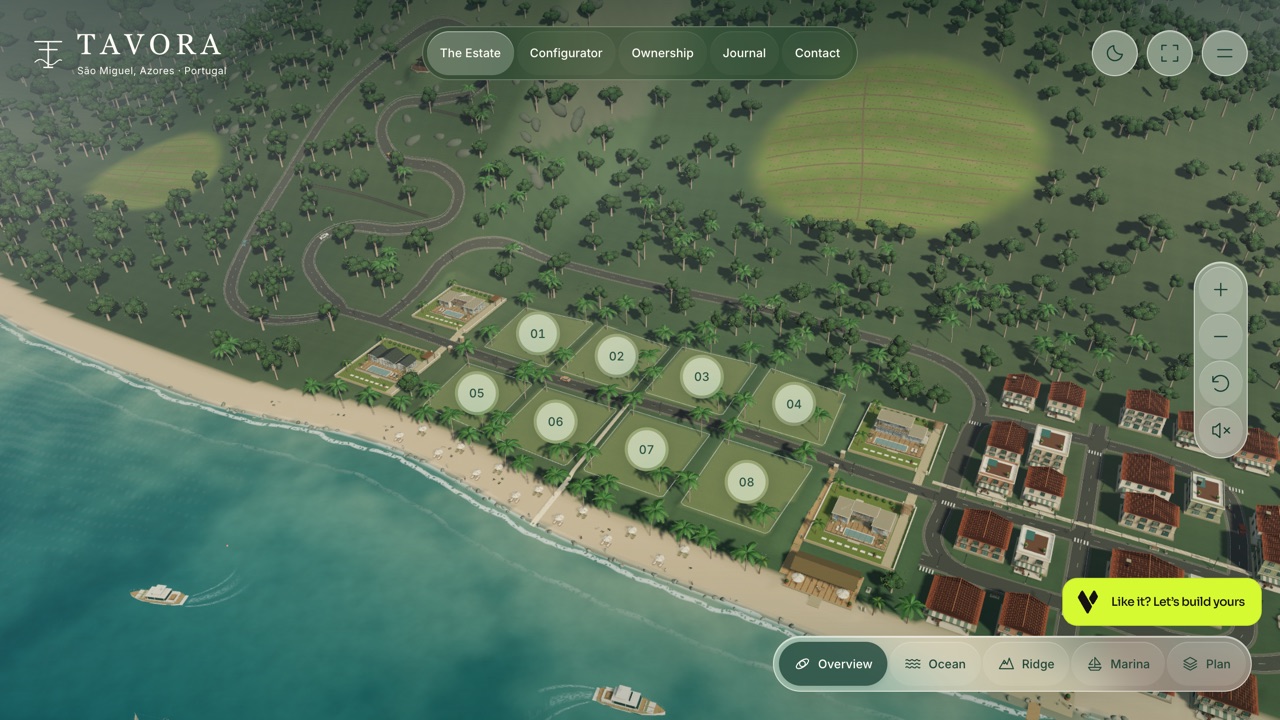
Dig past the 3D lobby, and "Sublevel" reads as a demo of the technique rather than an active studio. The eight featured projects — Halide Launch, Northwind Labs, Lumenary, Quillworks, Kestrel Studios, Cobaltine, Shop Moonrake, Signalhaus — are invented client names with invented case-study copy, the same pattern this collection already noticed in Tavora's placeholder real-estate listing. The social icons in the footer menu (X, Instagram, GitHub, LinkedIn) all point nowhere, and the GitHub README calls the whole thing a "studio concept" outright. What's real is the engineering: a fully-realised 3D environment, a working portfolio layout underneath it, and — a genuine surprise — two separate, scored arcade games hidden in the lobby.
How to play Sublevel Studio
- Home, Work, Services and Lab in the header are anchors on one continuous page, not separate 3D scenes — Work and Services scroll down into the flat portfolio content below the loft; Lab stays inside the 3D lobby itself, since that's where both Easter-egg games live.
- Click the backboard under the basketball hoop to start SBLVL SHOT!: drag up on the ball to throw it. A HUD tracks SCORE and SHOTS live, and a clean make reads "SWISH!" versus a rattled-in "BUCKET!" — confirmed by actually sinking one during testing, not just reading the prompt. Esc leaves.
- Click the red arcade cabinet next to the sliding doors to start Sublevel Defender, a small on-canvas shooter: Left/Right arrows move, Space fires, Esc leaves.
- The ☰ menu button opens a full-screen nav panel (Home / Work / Services / People / Blog / Lab / Contact) over a blurred, dimmed lobby, along with a couple of small pieces of world-building — "Kyoto & remote · open late" and "Est. 2019 · dispatch 026."
- Keep scrolling past the case studies and the capabilities list to reach the contact section and the footer — the ground there renders as an animated engraved-terrain reveal, the "retro footer animation" the author's tweet mentions.
- There's also a plain-text "machine-readable view" (a button near the top of the page) that dumps an agents.md-style summary of the whole site — services, clients, even both Easter eggs, spelled out for a crawler rather than a person.
Click Fullscreen above the game for the largest play area. If the game does not load, use Open in new tab to play it directly from our copy.
Why it's worth your time
The two lobby games are real, not decorative props — confirmed by reading the shipped script, not just clicking around. SBLVL SHOT! runs actual projectile physics (a ball with velocity and gravity, a rim-and-backboard collision check, a scored make versus an in-flight miss) with its own persistent-looking SCORE/SHOTS counter. Sublevel Defender is a second, complete arcade-shooter game loop — player position, bullets, enemies — running on the arcade cabinet's own in-scene canvas texture. Most portfolio sites that bolt on an Easter egg leave it at a sound effect or a hidden image; this one shipped two working games with their own state machines.
The entire thing is one HTML file, and a big one — about 4.5 MB, markup, styles, scene code, shaders, canvas-drawn textures and embedded 3D model data all inline, per the GitHub README's own description. The only things it fetches from anywhere else are Google Fonts (Geist, Geist Mono, Inter, Inter Tight) and the Three.js runtime — the core module from a CDN, plus two small addons (GLTFLoader, BufferGeometryUtils) from a second one. No analytics, no trackers, nothing else — the cleanest network footprint of any 3D piece in this collection.
The invented studio's lore doesn't quite agree with itself, which is a small tell of how it was assembled. The hidden machine-readable text block gives the studio's location as "Porto, Portugal" and its founding year as 2021; the visible full-screen menu instead says "Kyoto & remote" and "Est. 2019." Neither is meant to be checked against the other — they're both flavor text for a company that isn't real — but it's the kind of seam that shows up when a site's copy is generated in more than one pass.
The public repository (MengTo/sublevel-studio, 56 stars at the time of writing) has no LICENSE file — it's open and forkable, and the README explicitly invites remixing it for "a new studio identity, another architectural setting, or a smaller interaction study," but nothing formally licenses that reuse.
How it was made and where it lives
Published on GitHub Pages from a public repository. The author publishes as MengTo. Original: https://mengto.github.io/sublevel-studio/. The Play button above runs our own unmodified copy, so the game keeps working here if that page goes down — which on free hosting usually has nothing to do with the author. Nothing about the game itself is changed, and the original stays linked from every page.
The post that led us here
Meng To@MengToI open-sourced the three.js site I built with Fable 5.1. I pushed the Kyoto theme further with tatami spaces, sliding doors, a 3D plastic menu, and a retro footer animation. It's surprising how much you can reshape when the whole experience is procedural code.
If you like Sublevel Studio, try these
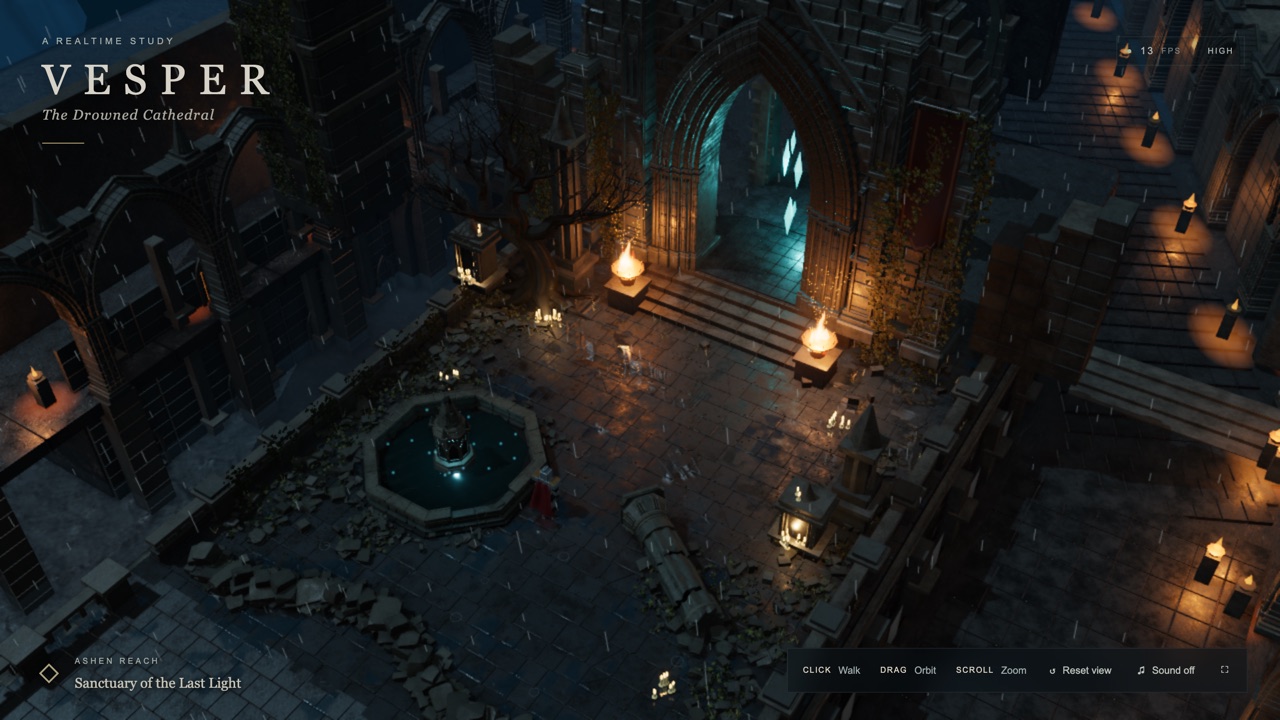
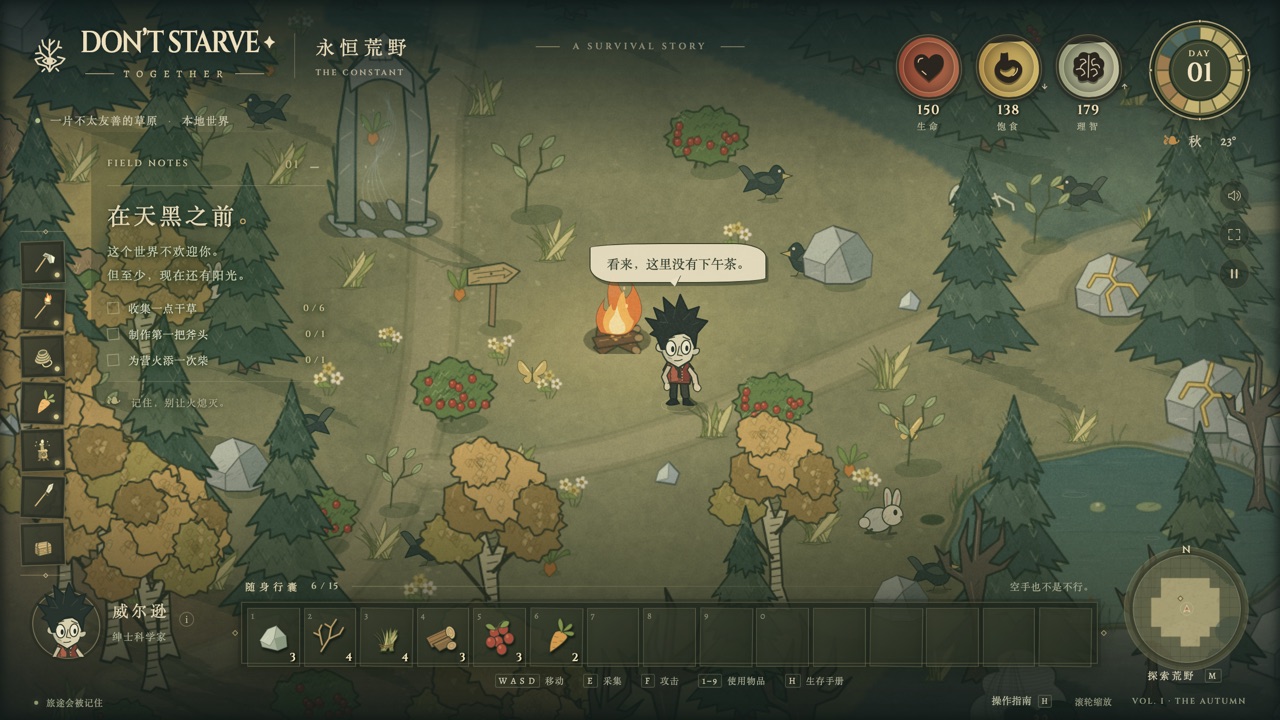
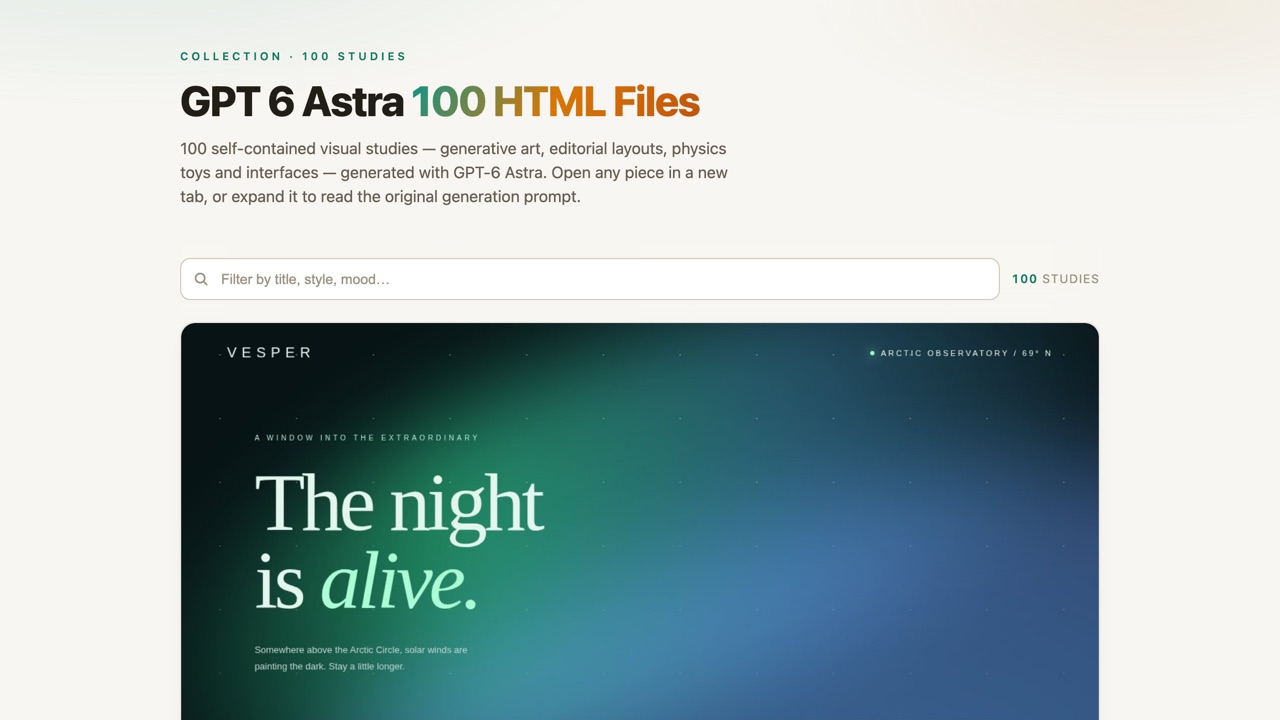
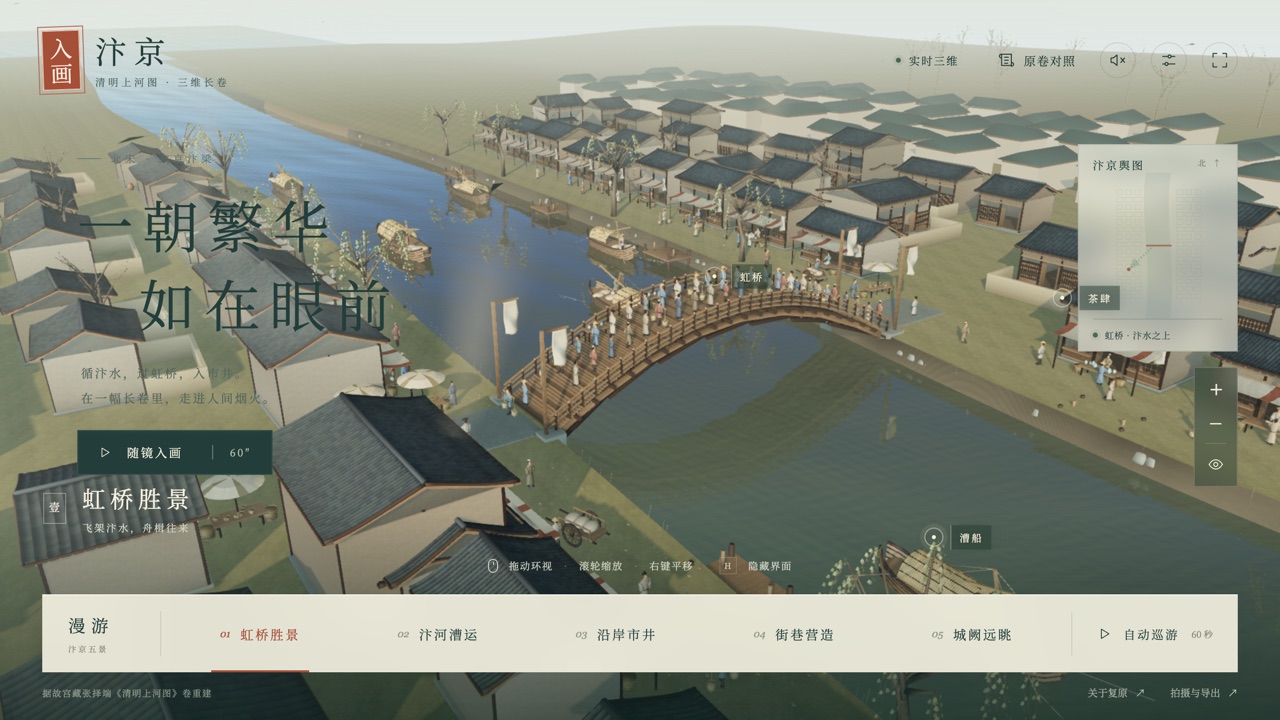
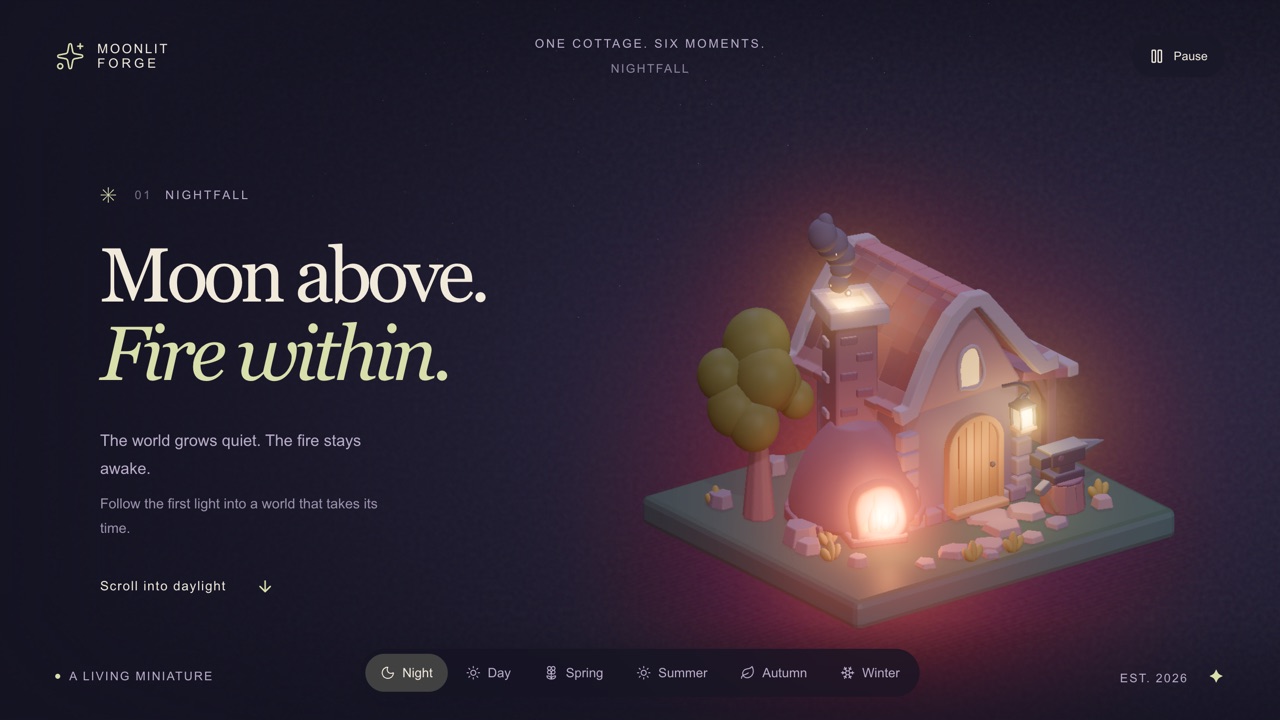
StoryComet is the same author's other recent Fable 5.1 project from the same week — a paid, link-out entry, which makes an instructive contrast with this one's free, open-source, self-hosted approach. Tavora and Vesper are this collection's other look-don't-necessarily-win 3D scenes; Moonlit Forge is the smallest and quietest of the four.
Frequently asked questions
- Is Sublevel Studio a game?
- Not primarily — it's a design studio's portfolio site rebuilt as a 3D lobby you walk through, with no score or goal to the site itself. It does, however, contain two separate real games as Easter eggs: a scored basketball-hoop mini-game and a small arcade shooter, both fully playable.
- Is Sublevel a real design studio?
- No. The eight "case studies" are invented client work with invented company names, the footer's social links go nowhere, and the project's own GitHub README calls it a "studio concept" rather than a business.
- What are the two hidden games, and how do I find them?
- Click the basketball backboard for SBLVL SHOT! (drag up on the ball to throw; SCORE and SHOTS are tracked). Click the red arcade cabinet by the sliding doors for Sublevel Defender (arrow keys to move, Space to fire). Esc leaves either one.
- Is this related to StoryComet?
- Same author (Meng To) and the same model (Fable 5.1), posted the same week — but StoryComet is a paid product this site links to rather than hosts, and Sublevel Studio is free, open-source and mirrored here in full.
- Can I use it on a phone?
- The layout and the 3D lobby both reflow to phone width cleanly. The basketball throw is a drag gesture and should work as a touch-drag; the arcade cabinet is keyboard-only (arrow keys and Space, no on-screen substitute), so that one Easter egg needs a real keyboard.
- Is Sublevel Studio free to play?
- Yes. Everything on Floating Arcade is free, with no account, ads or downloads.
- Can I embed this game on my own website?
- Yes — copy the snippet below. The embedded player links back here, which is how we ask to be credited.
Embed Sublevel Studio on your site
Paste this where you want the game to appear: